English
English Faculty
Why do we learn this subject?
English empowers us to become better readers, braver thinkers, and stronger communicators. We study English to analyse spoken and written language and literature across diverse eras and cultures, while learning to express our own ideas with precision, passion, and creativity. Beyond exams, English builds critical empathy, independent thinking, and self-advocacy, giving pupils the skills to evaluate the world around them and advocate for themselves and others in any context.
Our curriculum journey
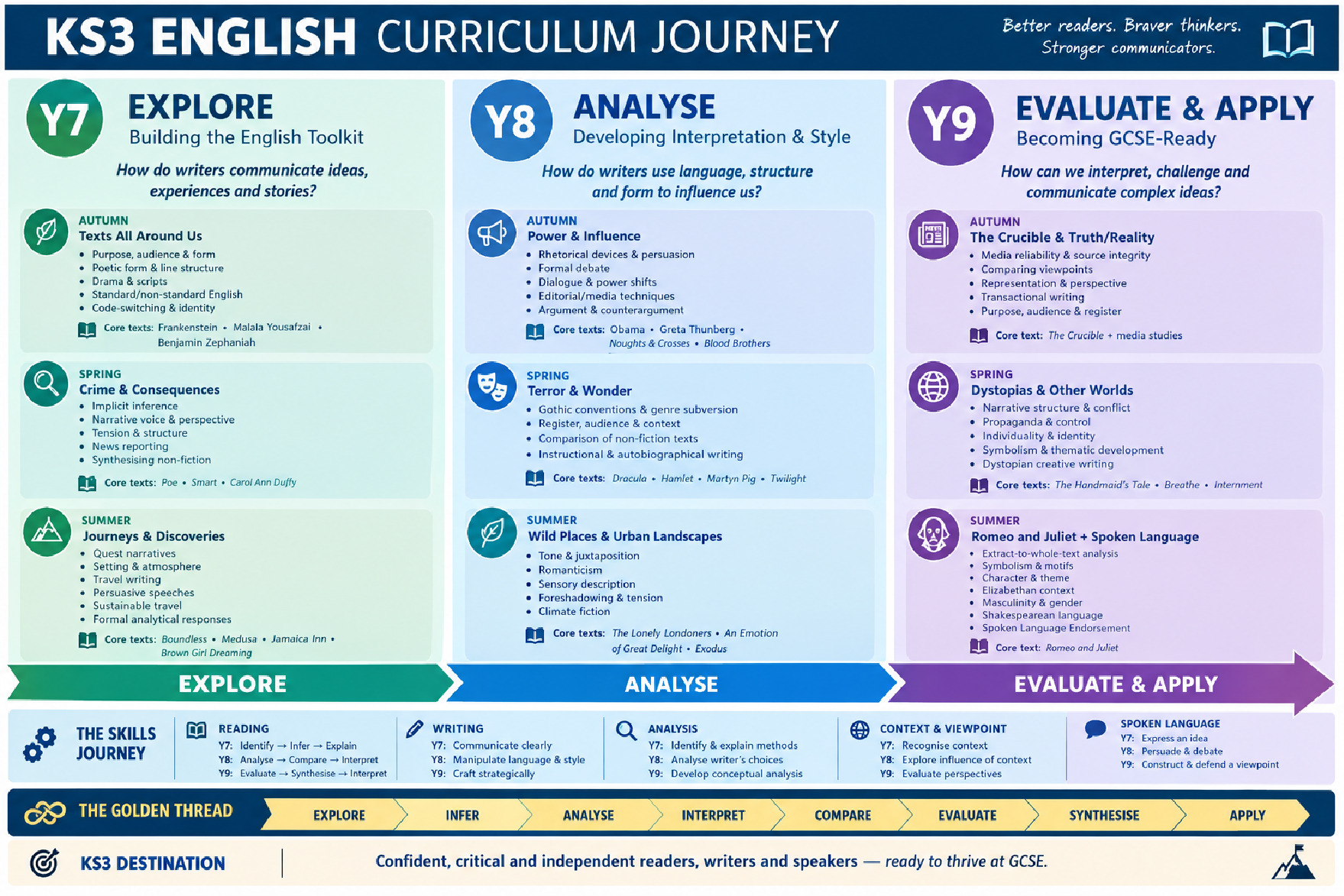
Year 7 – Explore
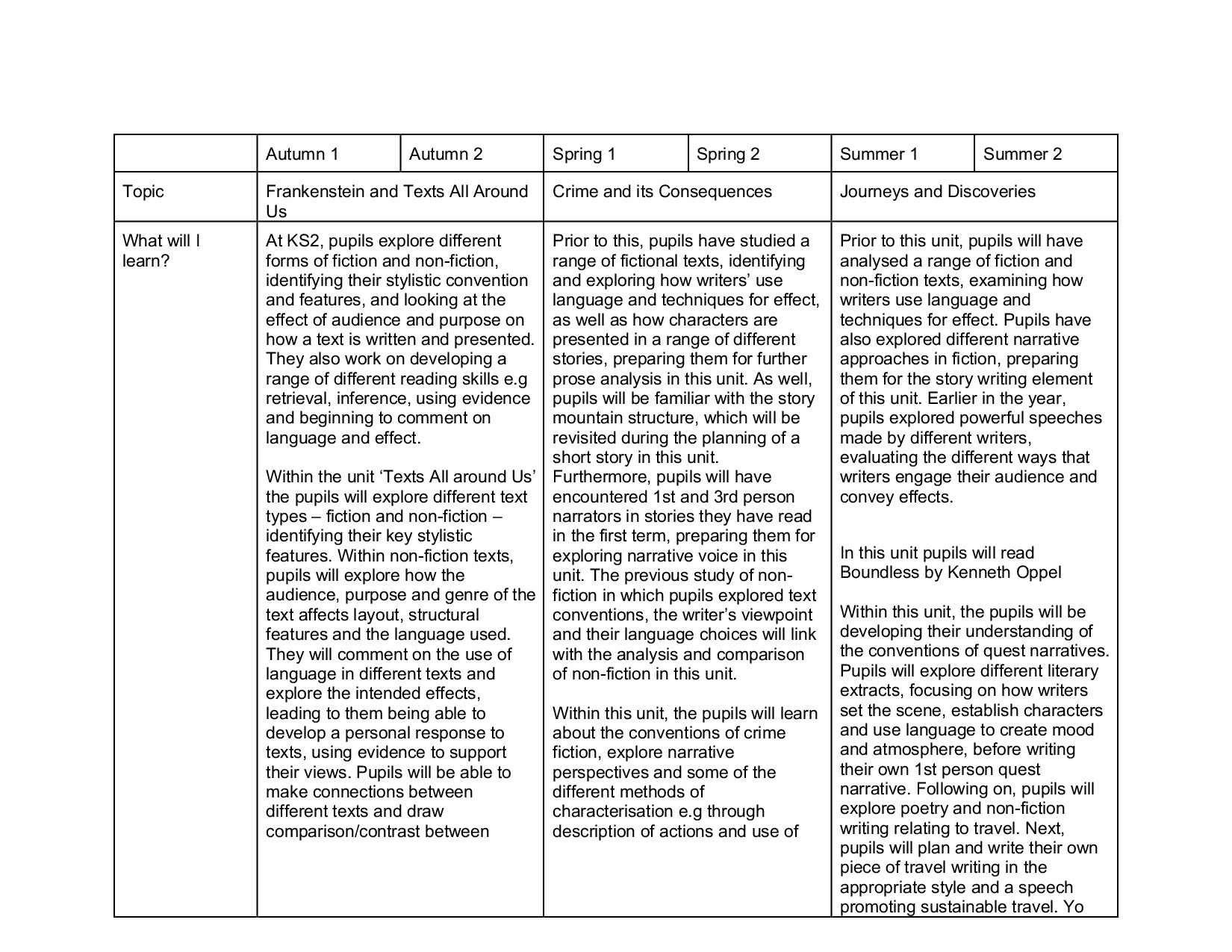
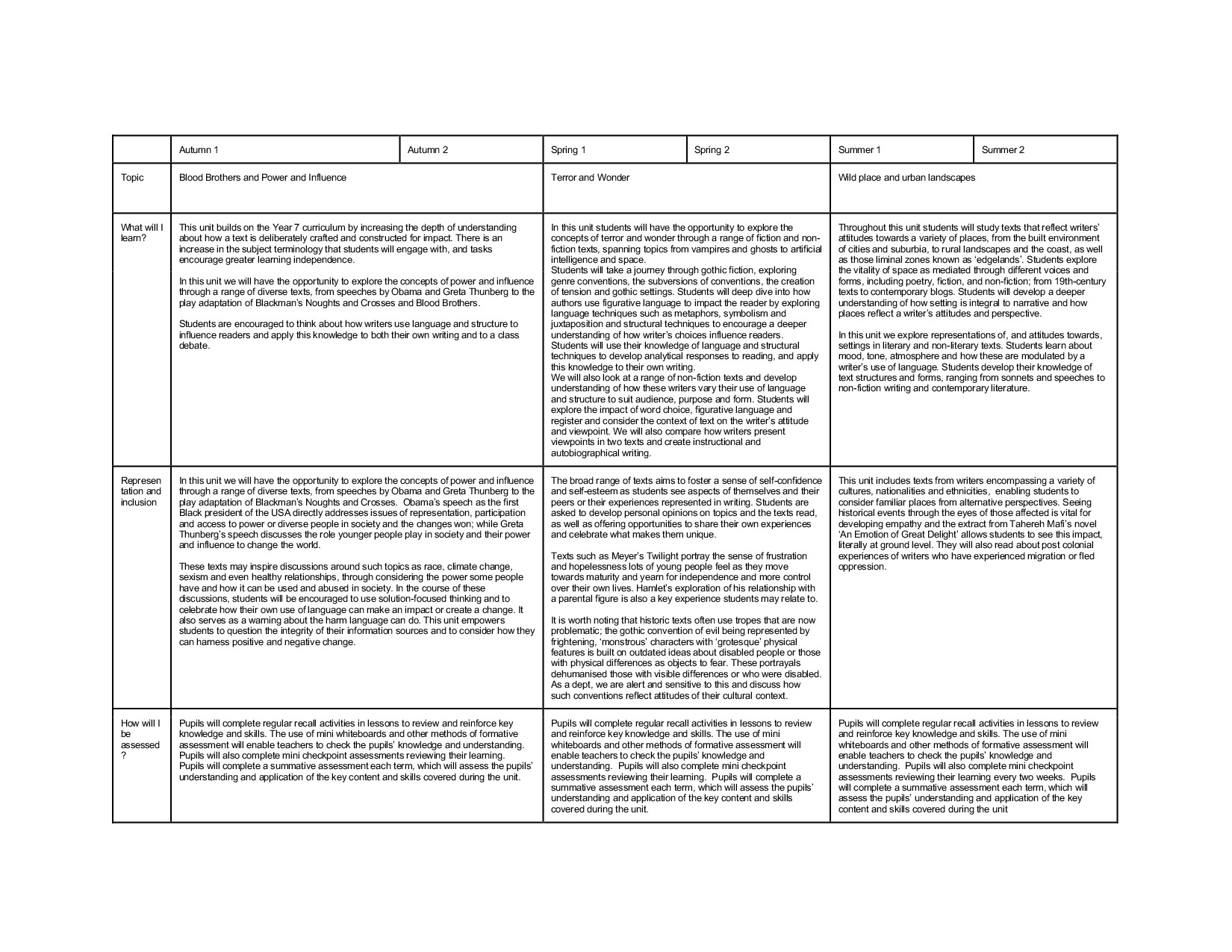
Building the English toolkit by investigating how writers communicate ideas, experiences, and stories. Key units include Texts All Around Us (exploring purpose, form, and identity with texts like Frankensteinand Malala Yousafzai), Crime & Consequences (narrative voice, implicit inference, news reporting), and Journeys & Discoveries (quest narratives, travel writing, persuasive speeches and Kenneth Oppel's Boundless).
Year 8 – Analyse
Developing interpretation and stylistic awareness to see how language, structure, and form influence readers. Pupils study Power & Influence (rhetoric, formal debate, Noughts & Crosses), Terror & Wonder (Gothic conventions, Dracula, Hamlet, Martyn Pig), and Wild Places & Urban Landscapes(climate fiction, Romanticism, tone, and setting).
Year 9 – Evaluate & Apply
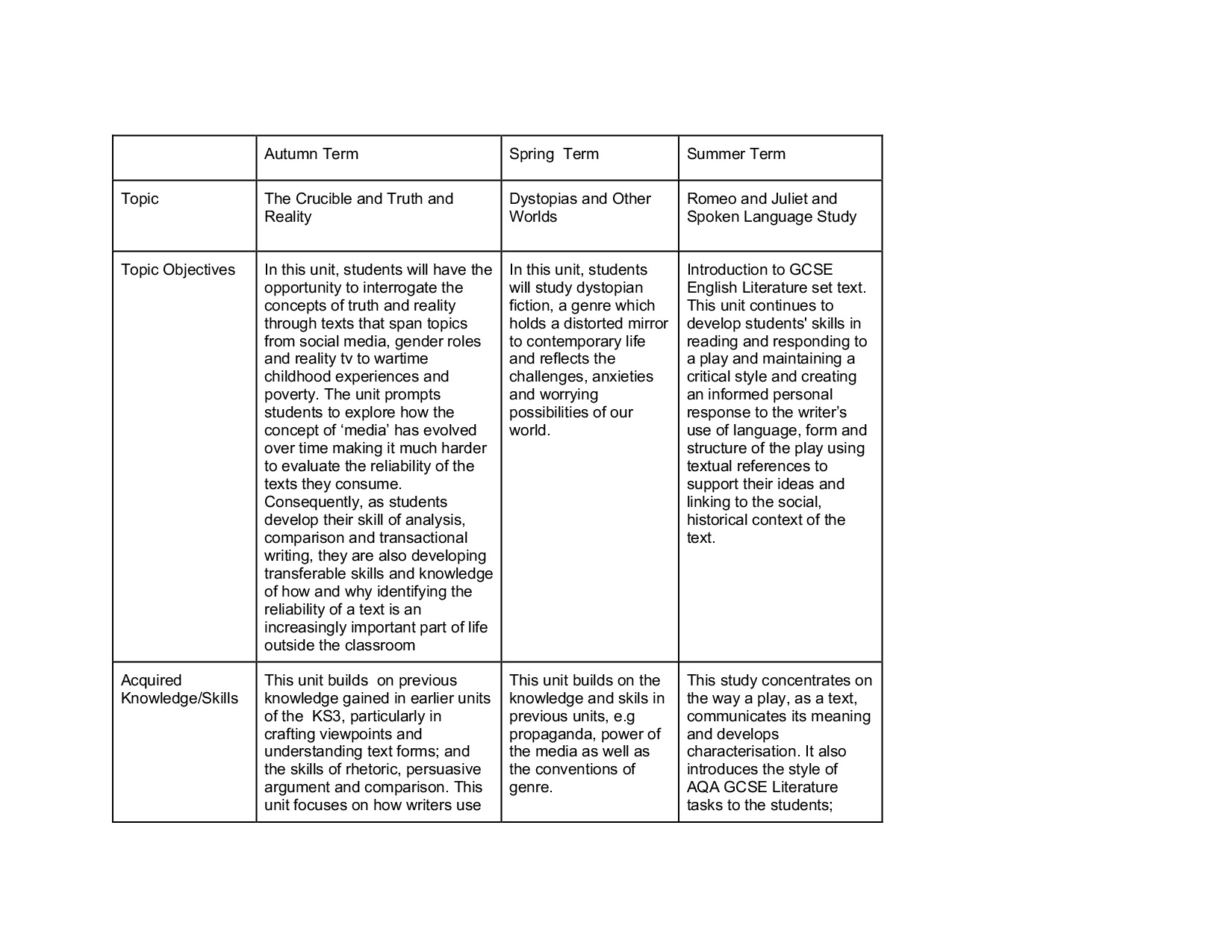
Becoming GCSE-ready by interpreting, challenging, and communicating complex ideas. Key topics include The Crucible & Truth/Reality (media integrity, transactional writing), Dystopias & Other Worlds (propaganda, dystopian creative writing, The Handmaid's Tale), and an introduction to GCSE Literature through Romeo & Juliet.
Year 10 – Build Your Foundations
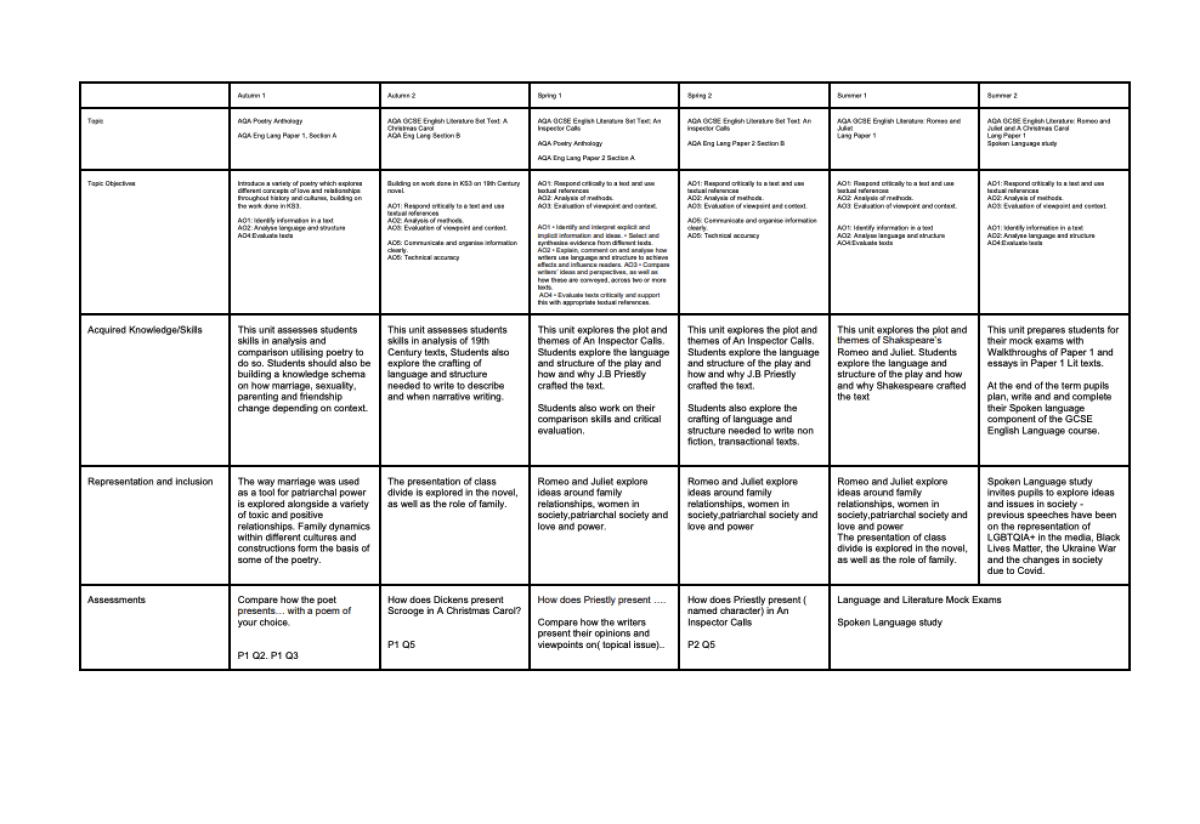
Establishing core knowledge and critical analysis across set texts and language skills. Key focus areas cover the AQA Poetry Anthology (Love & Relationships), A Christmas Carol(craft, narrative writing), An Inspector Calls (social responsibility, critical evaluation), transactional non-fiction writing, Romeo and Juliet (Shakespearean language and intent), and Spoken Language preparation.
Year 11 – Master & Apply
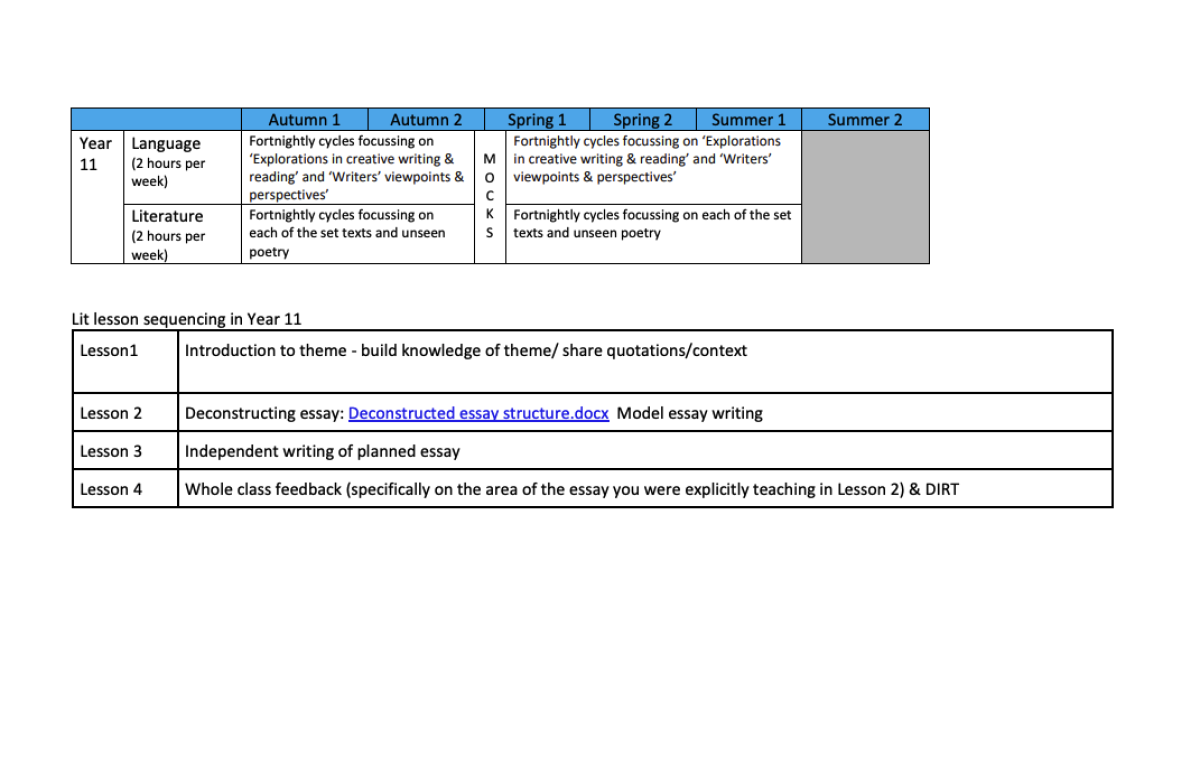
Deepening understanding, refining exam techniques, and building writing independence. Pupils engage in fortnightly revision cycles alternating between English Language skills (creative and transactional reading/writing) and English Literature set texts (A Christmas Carol, An Inspector Calls, Romeo and Juliet, and Poetry) alongside unseen poetry and targeted mock practice.
Knowledge that connects our curriculum
Our English curriculum is unified by a clear "Golden Thread" that tracks progress across key skill tiers:
|
Core Skill Tier |
Focus & Progression Across Key Stages |
|---|---|
| 1. Explore & Infer |
Unlocking meaning, recognizing implicit ideas, identifying structural features. |
| 2. Analyse & Interpret | Deconstructing how writers use language, methods, and form for effect. |
| 3. Compare & Evaluate | Linking themes and viewpoints across texts; constructing conceptual arguments. |
| 4. Synthesise & Apply | Applying knowledge strategically to craft original creative writing and essays. |
How pupils get better
Improvement comes through structured, reflective learning cycles designed to build confidence and technique. A typical sequence involves:
-
Knowledge & Context: Building core text schema, key quotes, and thematic understanding.
-
Deconstruction & Modelling: Examining exemplar structures and watching live model writing.
-
Independent Application: Drafting planned essays with clear lines of argument.
-
Targeted Feedback (DIRT): Acting directly on whole-class and individual teacher feedback to redraft and improve work.
Reading, vocabulary and communication
Reading lies at the heart of our curriculum, exposing pupils to rich literary texts from Shakespeare and Dickens to modern voices like Greta Thunberg, Malala Yousafzai, and Benjamin Zephaniah. We explicitly teach subject terminology, rhetorical devices, and academic vocabulary. Spoken language is embedded throughout, giving every pupil formal opportunities to debate, present, and construct compelling verbal arguments.
How we know pupils are learning
We track pupil progress continuously to ensure support is targeted precisely where it is needed:
-
In-Lesson Recall: Daily retrieval practice, mini-whiteboard checks, and hinge questions.
-
Summative Assessments: Formal reading, writing, and literature tasks measuring cumulative understanding.
-
Mock Exams & Targeted Intervention: Mock assessment series in Key Stage 4 backed by dedicated DIRT sessions and targeted support groups.
Beyond the classroom
English extends far beyond written exams and classroom walls. Pupils have rich opportunities to develop their passions and showcase their talents through a vibrant lineup of extra-curricular clubs:
-
Award-Winning Debate Club: Pupils hone their public speaking, critical thinking, and persuasive argument skills while competing at a regional and national level.
-
Creative Writing Club: A welcoming space for aspiring authors, poets, and scriptwriters to experiment with narrative voice, enter national writing competitions, and collaborate with peers.
-
School Newspaper: Pupils journalists and editors research, write, and publish stories covering school life, current events, and opinion pieces, gaining hands-on media and editorial experience.
-
Film Club: Pupils analyse screenwriting, cinematography, and narrative framing in cinema, expanding their critical media literacy and storytelling appreciation.
Where can this subject take me?
Strong English skills open doors across all industries by developing critical thinkers and articulate communicators. Pathways include:
-
Higher Education: A-Levels and degrees in English Literature, Language, Law, Journalism, History, Politics, and Media Studies.
-
Careers: Law, media and journalism, public relations, publishing, digital content creation, teaching, policy-making, marketing, and corporate communications.
How families can support learning
-
Encourage Daily Reading: Discuss fiction, non-fiction, news articles, and blogs together to build vocabulary and background knowledge.
-
Discuss Core Themes: Talk through the big ideas explored in lessons—such as power, social responsibility, media reliability, and fairness.
-
Support Extra-Curricular Pursuits: Encourage your child to participate in Debate Club, write for the school newspaper, or share their creative writing projects at home.
-
Practice Active Recall: Help test key quotes, character relationships, and literary terms before assessments.
-
Review Written Work: Encourage your child to read their essay plans or draft responses aloud to catch expression errors and refine their arguments.
.png)