
Design & Technology
Creative Arts Faculty
Why do we learn this subject?
In Design & Technology, pupils build powerful knowledge and learn distinctive ways of thinking, communicating and solving problems. The curriculum is ambitious for all pupils and is designed to build confidence, independence and readiness for the next stage.
Our curriculum journey
Year 7 – Workshop Skills
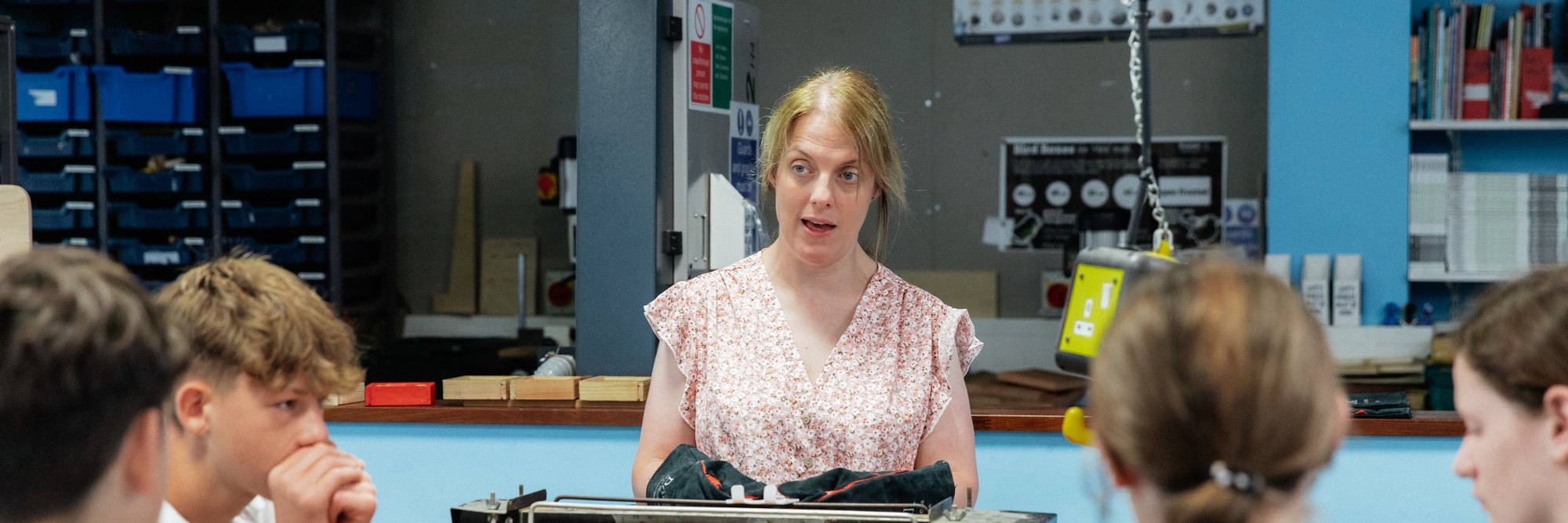
Pupils develop a secure foundation in workshop safety, materials knowledge and manufacturing processes. Through practical challenges they learn to use tools, machinery and CAD/CAM technologies safely and accurately whilst developing resilience, independence and problem-solving skills. The project introduces key manufacturing techniques and encourages pupils to work creatively, evaluate outcomes and build the confidence required for future Design & Technology projects.
Year 8 – Polymers
Pupils investigate the properties and applications of polymers whilst designing and manufacturing a functional nightlight. Through vacuum forming, line bending and CAD/CAM processes, they develop creativity, technical knowledge and practical manufacturing skills. Pupils learn how materials, systems and manufacturing processes influence products whilst exploring how Design & Technology impacts everyday life through innovation, sustainability and problem-solving.
Year 9 – Joining Timbers
Pupils analyse the work of Charles Rennie Mackintosh and use their research to design and manufacture a decorative timber box. They develop woodworking, CAD and laser-cutting skills whilst learning about materials, construction techniques and design heritage. Through practical manufacture and evaluation, pupils develop creativity, craftsmanship, perseverance and independent problem-solving whilst preparing for the demands of GCSE Design & Technology.
Year 10 – GCSE Design & Technology
Pupils begin the AQA GCSE course by developing skills in designing, modelling and manufacturing using timber, metals, polymers and CAD/CAM technologies. Through a range of practical projects, they build technical knowledge, creativity and problem-solving skills whilst investigating materials, systems, sustainability and manufacturing processes. The course provides the knowledge and practical experience required for the Year 11 Non-Exam Assessment and written examination.
Year 11 – GCSE Design & Technology
Pupils complete the AQA GCSE course through the Non-Exam Assessment and preparation for the written examination. They investigate a contextual challenge, undertake research, develop design ideas, manufacture a prototype and evaluate outcomes. Drawing upon their understanding of materials, manufacturing processes and design principles, pupils demonstrate creativity, independence and technical competence whilst preparing for further study and careers in design, engineering and manufacturing.
Knowledge that connects our curriculum
Users and needs, designing, materials, manufacture, evaluation and sustainability. These ideas are deliberately revisited so that pupils remember more and make increasingly sophisticated connections.
How pupils get better
Pupils improve in Design & Technology through explicit teaching, modelling, purposeful practice, retrieval of prior knowledge, increasingly challenging application, feedback and opportunities to explain, evaluate or refine their thinking.
Reading, vocabulary and communication
Pupils are taught the vocabulary and forms of communication that matter in Design & Technology. They read and interpret appropriate texts, questions, sources, instructions, data or representations and learn to communicate ideas accurately.
How we know pupils are learning
Teachers use day-to-day formative assessment, questioning, retrieval, pupil work and appropriate summative assessment to identify what pupils know, address misconceptions and plan next steps. At Key Stage 4, assessment also prepares pupils for the requirements of their qualification.
Beyond the classroom
practical projects and links to engineering, manufacturing and sustainability.
Where can this subject take me?
This subject develops knowledge and transferable habits valuable for engineering, architecture, product design, construction, manufacturing and CAD.
How families can support learning
Regular attendance, discussion about current learning, reading and completion of home learning all make a difference. Subject support includes Google Classroom, GCSEPod and selected Oak resources. Google Classroom remains the first point of access for home learning.
Design & Technology Resources
Loading...